What truly shapes us?
An insight into epigenetics

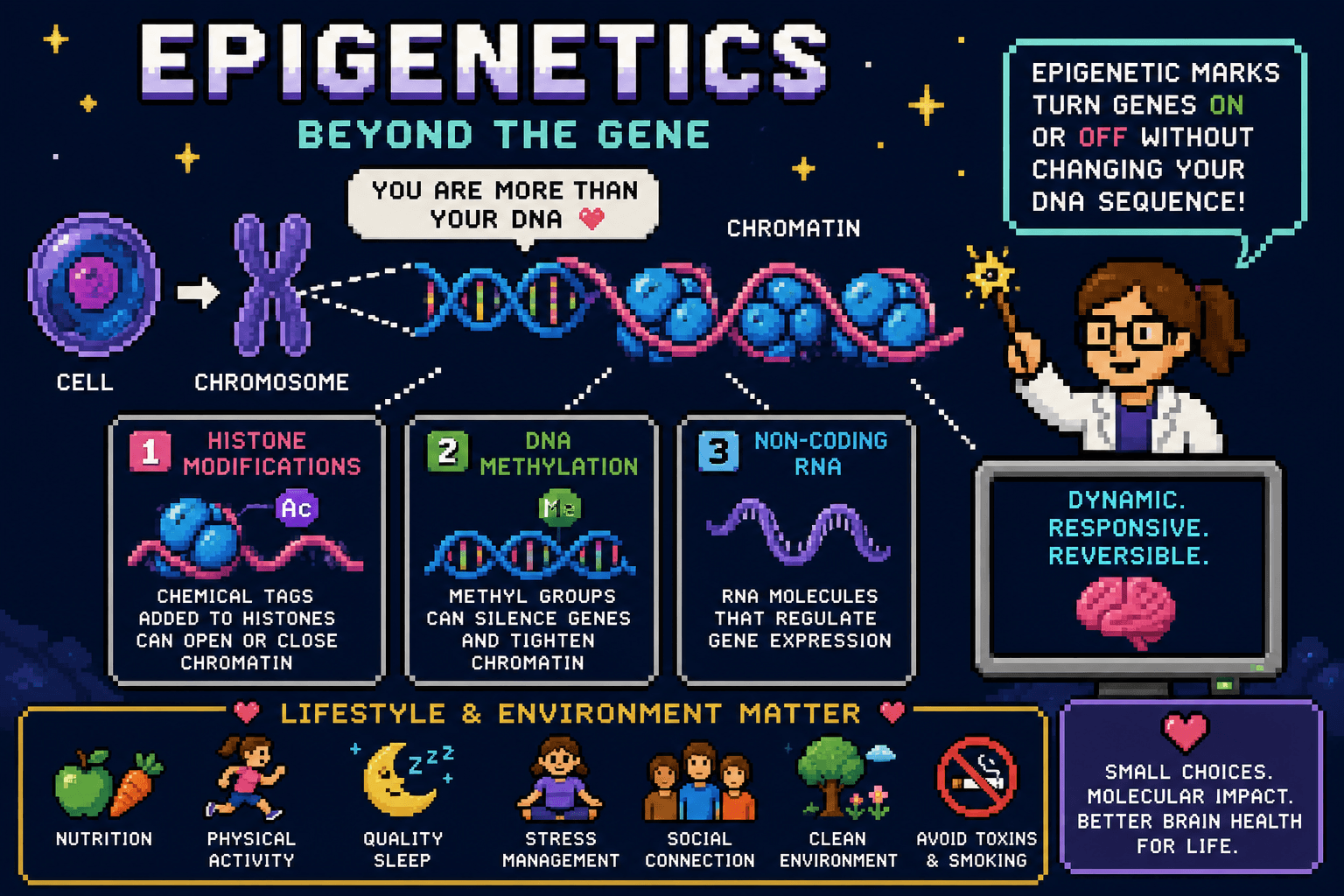
Are we solely defined by our genes? Is our genetic history the only factor that shapes our future? Epigenetics reveals that the answer is far more nuanced. Epigenetics describes regulatory mechanisms—biological processes that control gene activity without altering the underlying DNA sequence. Simply put, “epi” means above, and “genetics” refers to our DNA. This expanding field is transforming our understanding of health, disease, and longevity.
Beyond the genetic blueprint
This emphasizes how much our environment can shape who we are. For instance, certain experiences an individual has can determine which of their genes are turned on or off. Gene regulation occurs in various ways, ultimately determining a cell’s identity and its response to signals. What makes epigenetics remarkable is that these regulatory patterns can be heritable through cell divisions, ensuring that the diverse cells in our body maintain their specialized roles.
Where the genome gets its instructions
Epigenetic changes occur right on our chromosomes, which are tightly packed bundles of DNA in each cell’s nucleus. DNA wraps itself around proteins called histones to form chromatin. How tightly that wrapping is determines how open or closed our chromatin is, which in turn decides whether the cell can actually read and use certain genes. The entire amount of epigenetic modification of the DNA in the body is known as the epigenome.
There are three main forms of epigenetic changes: histone modifications, DNA methylation, and non-coding RNA.
-
Histone modifications: These happen when chemical groups are added onto the histones. Depending on what gets added (like an acetyl or methyl group), the DNA can be more permissive or closed.
-
DNA methylation: When a methyl group attaches to DNA, it typically silences the gene. Silencing occurs as the process impedes transcription machinery from binding, causing chromatin to tighten and preventing gene activation
-
Non-coding RNA: Although RNA is typically translated into a protein, this form of RNA is still a functional molecule that can regulate gene expression.
Why brain health pays attention
Epigenetics is becoming increasingly important in our understanding of age-related disease, especially neurological conditions such as Alzheimer’s disease. While inherited risk genes can increase susceptibility, epigenetic regulation can influence whether, when, and how strongly those genes are expressed.
This is particularly relevant in neurons. Unlike many other cell types, neurons are largely post-mitotic, meaning that once they mature, they generally do not divide and replace themselves in the same way blood or skin cells do. As a result, epigenetic marks acquired over a lifetime may persist for decades. These long-lasting molecular changes can influence brain function, memory, inflammation, stress responses, and resilience to neurological decline.
The signals we live with
They reflect continuous interactions between genes, lifestyle, environment, and aging. Factors such as diet, physical activity, sleep, stress and emotional state can influence gene expression through pathways involving the epigenome, microbiome, brain, immune system, and metabolism.
Further, environmental exposures, including pollution, toxins, secondhand smoke, smoking, and alcohol, may also alter epigenetic patterns over time. Chronic stress and poor sleep can contribute to biological dysregulation, while regular movement, nutrient-dense food, restorative sleep, and effective stress regulation may support healthier function.
In this sense, daily life helps shape the molecular context in which genes operate. Your DNA sequence may remain largely unchanged, but the regulation of that DNA is dynamic, responsive, and influenced by the signals your body receives over time.